Jeff Antebi started Waxploitation in 1996 as a management company with an outsider bent and a unique angle.
After experiencing frustration with the traditional music industry of the day’s lack of openings—both in mindedness and paying jobs--the LA-based creative departed the music biz to become a war ...
photographer (check out his book
Fever Dreams) and then returned to the industry and Waxploitation recognizing an untapped resource in the world of record producers: the artists themselves. In those days, few label executives wanted to get behind such a concept, and so Antebi found his niche. At the same time, he has grown his interest in giving back, with various charity albums including the most recent
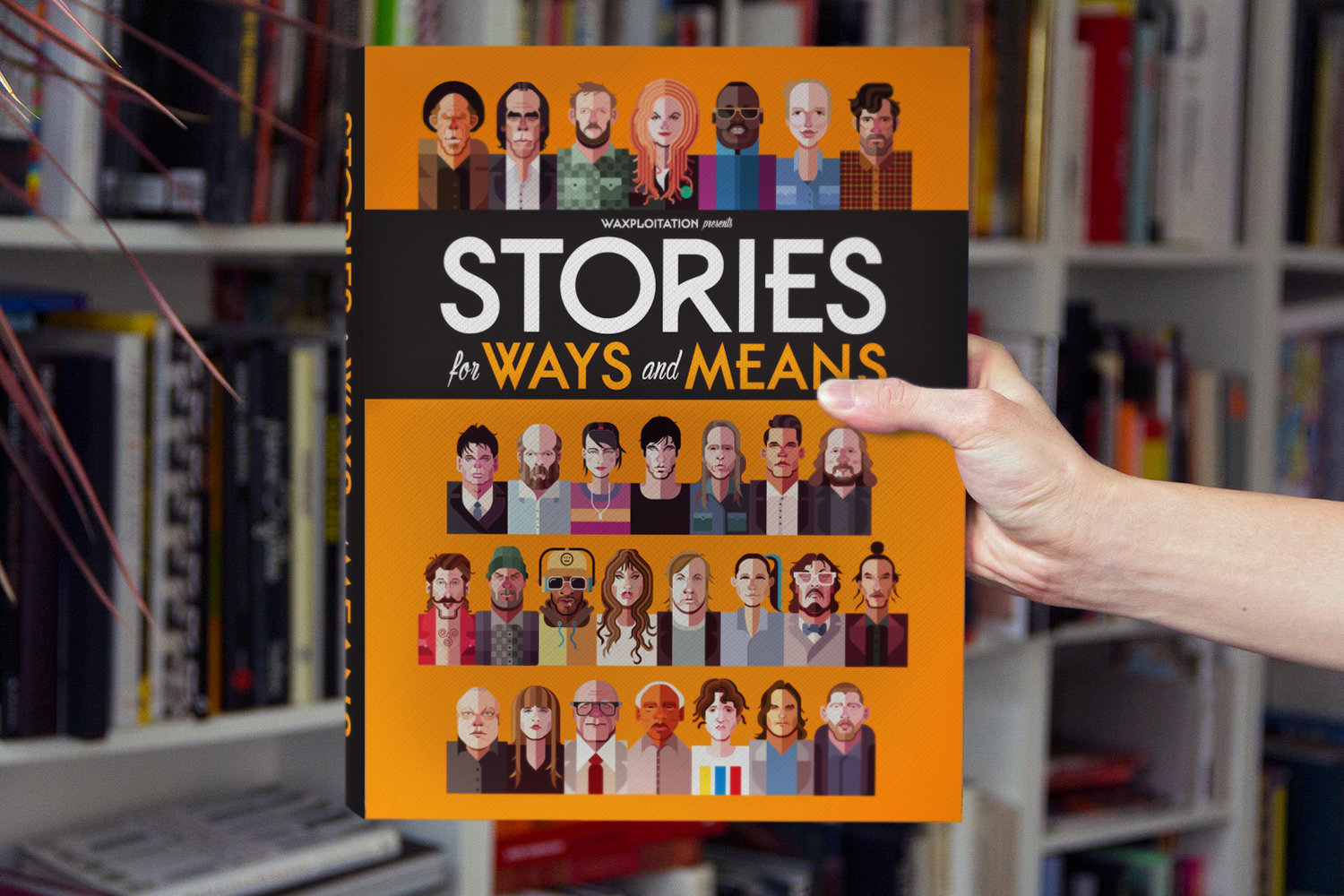
Stories for Ways & Means, an original book of collaborative children’s stories called created and illustrated by a wide range of A-list artists including Tom Waits, Nick Cave, Justin Vernon, Anthony Lister, Joe Coleman, and more.
“Building a roster from artists-as-producers was like building the Island of Misfit Toys,” Antebi says. “If somebody was branded as impossible to deal with, they ended up on my roster. I was managing people who were highly undervalued or misperceived as unmanageable. I spent 100-percent of my time in the ’90s trying to convince record companies to take a chance on artists to produce records.”
Of course, that was 21 years ago, and today Waxploitation has risen as a unique and dynamic-thinking home for world-class artists to blossom, thrive, and evolve, under Antebi’s wizened guidance. To date, its artists--which include Danger Mouse, Gnarls Barkley and Broken Bells--have won multiple Grammy Awards (having been nominated for 11 total during their tenue with Waxploitation) and two MTV VMA’s, and sold millions of albums and singles worldwide while touring the world many times over. Waxploitation and their artists have also earned millions in synch placements, and is on pace to gross over $800,000 in synch licenses in 2017 with a catalog of less than 1,000 songs, with creative music placements including Apple Watch, IBM, Adidas, Twitter, iPhone, Nike, Johnnie Walker, Lexus, VICE, Homeland, Breaking Bad, Ray Donovan, and more. The company’s biggest synch so far this year was for a commercial in Europe that earned Waxploitation and their artists over a quarter of a million dollars and had an audience of 200 million viewers. In addition, the label will release a new album from Mississippi bluesman R.L. Boyce.
“Waxploitation has held a unique spot in arts, entertainment, and commerce for two decades because I have wake up each morning wanting to be the first person to hear something other people have missed discovering,” Antebi says. “The more obscure, the earlier in an artist’s career, the better. The music industry I like to spend my time in is the one that thrives from exploration, the thrill of being ‘the first pair of ears to land upon something amazing.’”
Antebi has thrived as an explorer since the very beginning. Over that first decade, Waxploitation became a place where left-of-center artists like Al Jourgensen (Ministry), Chris Vrenna (Nine Inch Nails), King Britt (Digable Planets) or E-Swift (Tha Alkaholiks) were championed as producers. In turn, Antebi’s philosophy grew as the industry grew, paving the way for his next phase and breakthrough discovery: Brian Burton, better known as Danger Mouse. Coming across the artist’s music on a beat tape, Antebi recognized the seeds of brilliance and reached out. As Burton’s star was soon to rise with the release of—and subsequent legal battle over—The Grey Album, Antebi’s drive for managing a multitude of artists, not to mention for the industry entirely, was waning, and so he decided to focus exclusively on his provocative newest signing, effectively utilizing Danger Mouse as Waxploitation’s proof of concept. Antebi began to slowly cut Waxploitation’s roster until the sole focus was Danger Mouse. “Brian and I sort of had a covenant that he would be my last artist. I didn’t really want to be in the music industry much longer and figured I’d throw everything I have into this one last hurrah, which ended up being a seven year hurrah. No one was more surprised than Antebi himself that he would spend the majority of the next decade managing and developing Burton’s career, which would include helming Gnarls Barkley and Broken Bells, as well Gorillaz, The Black Keys, Norah Jones, and Beck as well projects with David Lynch, Sparklehorse, Jack White, and more. “It took a decade of practicing with the concept that a great artist could be not just a brilliant producer, but one of the biggest producers in the industry,” Antebi says, “and that ended up being the second decade of Waxploitation.”
Antebi experienced stratospheric success with Danger Mouse, Gnarls Barkley, and Broken Bells, but began to recognize that same budding desire to leave the industry completely. “I think my nature is to explore, and it just seemed like it was time to retire my ears and try my eyes for a change. And so, in the middle of a marketing meeting plotting out the release of Broken Bells, he decided to act on this feeling and resolved to find a new path. His next career move wasn’t exactly anticipated, to say the least. Having taken an interest in photography while on a business trip to China in 2007, and despite no formal training, in 2009 he decided to become a photojournalist, focusing on shooting elections taking place in countries in conflict. He ventured to war-torn, highly dangerous areas in Afghanistan, Ciudad Juarez, the Thai-Malay border, Haiti, and Brazil, quickly developing his own skills and natural eye for composition, and bringing awareness to some of the crises that come with voting around the world. His photos appeared on the cover of The Paris Review and in GOOD magazine, Rolling Stone, PBS NewsHour, CNN, and NPR, and other wide-reaching sites. He also released a book of his work, Fever Dreams, in 2013. Having left the music industry at the height of success to pursue something more real and personally important, Antebi was fulfilling his own need to contribute to the world on a bigger scale, and at the same time, the distance from his first love this new path afforded was allowing him to fall for the music all over again.
“Having sworn off the idea of being in music put me in a position of not having to listen to music with any agenda,” Antebi says. “Towards the 15th year of Waxploitation, I had begun to listen to music and my first thought be ‘I wonder who the lawyer is,’ that’s the least cool way to listen to music. But for those two years off, I would just appreciate it without any extracurricular thought process. It opened the door for me to be an enthusiastic fan of music again. And my only agenda question was: ‘I wonder if i can be of assistance to this artist?’ I felt like there was such a richness of music out there that I got really motivated to turn the engine back on at Waxploitation.”
In 2015, Antebi re-opened the doors to Waxploitation with a renewed focus on helping outsider, up-and-coming, and unknown artists find an audience. His time abroad helped him understand how to come back to music on his own terms, and from there he immediately began to help more obscure artists make their mark globally. From contacting Venezuelan deejays via SoundCloud to European artists on web sites, his artists still receive the laser-focus attention and nurturing for which he became known initially, and Antebi has found a specific success formula in synchronization placements for his artists across multiple platforms. “Waxploitation considers every territory in the world an important one. It’s not unrealistic to think I can get a million people around the world to stream our songs—it’s a matter of hitting up likeminded listeners. And what digital brings to labels like mine is data: data is the phoenix rising from the ashes of the post-digital music industry.”
Seizing upon the industry’s new tilt towards streaming, Antebi has also positioned Waxploitation to take full advantage of the new landscape’s benefits for songs in the long term. “In a lot of ways, it’s a system that’s set up to reward labels and artists who can take the longest view of a song. It used to be that your earning period was 90 days. But today, with playlisting, especially Spotify and Apple Music, the song’s earnings are very consistent.”
Beyond Stories for Ways & Means, where 80-percent of profits are donated to education-minded children’s charities like 826 and Warchild, other for-charity projects include the Causes volumes and the Future Sounds Of… series (with releases highlighting music from Argentina, Brazil, Japan, and India in the works). For Antebi, this foray is a natural extension of what he’s always been geared to do, and a chance to give back on a larger scale. “I started Waxploitation as an underdog, a perpetual outsider. To have had a reasonable amount of success, it doesn’t make sense to not be paying that back a bit. So I have tried to donate a lot of profits at 100-percent, or at least 80-percent to benefit the work of other organizations that are much more valuable than a music company.”
The continued rise of Waxploitation is a testament to its founder’s own sense of patience, perseverance, and passion. From his vision and hand in the industry-wide acceptance of artists as producers, to the development of a mega-career like Danger Mouse’s, to this new era of label and publisher for the undiscovered and unsung, Antebi has recognized his stake to the fullest and figured out how to compete on no one’s terms but his own.
“My destiny has always been to be on the outside—it’s me and emerging scenes. Somehow it makes sense that I went and did a crisis-conflict war photography book, the Causes albums, the children’s book; it makes sense that I was one of the first people to manage artists as producers. Somehow in 2017 my experience has been that the deeper I dig, in terms of new artists out there, the more rewarding it is—financially, but spiritually and emotionally, too. The beauty of these days is that the farther out I’m looking for things, the better the results. It’s been unbelievably rewarding.”